


The August US jobs report is among the best we have seen in some time and provided an uplifting backdrop for the Labor Day weekend. Labor demand is solid and becoming more broad-based, unemployment remains low, and labor supply improved in August. At the same time, moderate wage growth and solid productivity gains show that inflationary pressures are subdued in the labor market.
In other words, the report reinforces our view that the Fed has little reason to worry about the employment side of its dual mandate. It leaves Fed policymakers free to focus on inflation. Let's take a deep dive into the report:
I. Job Growth
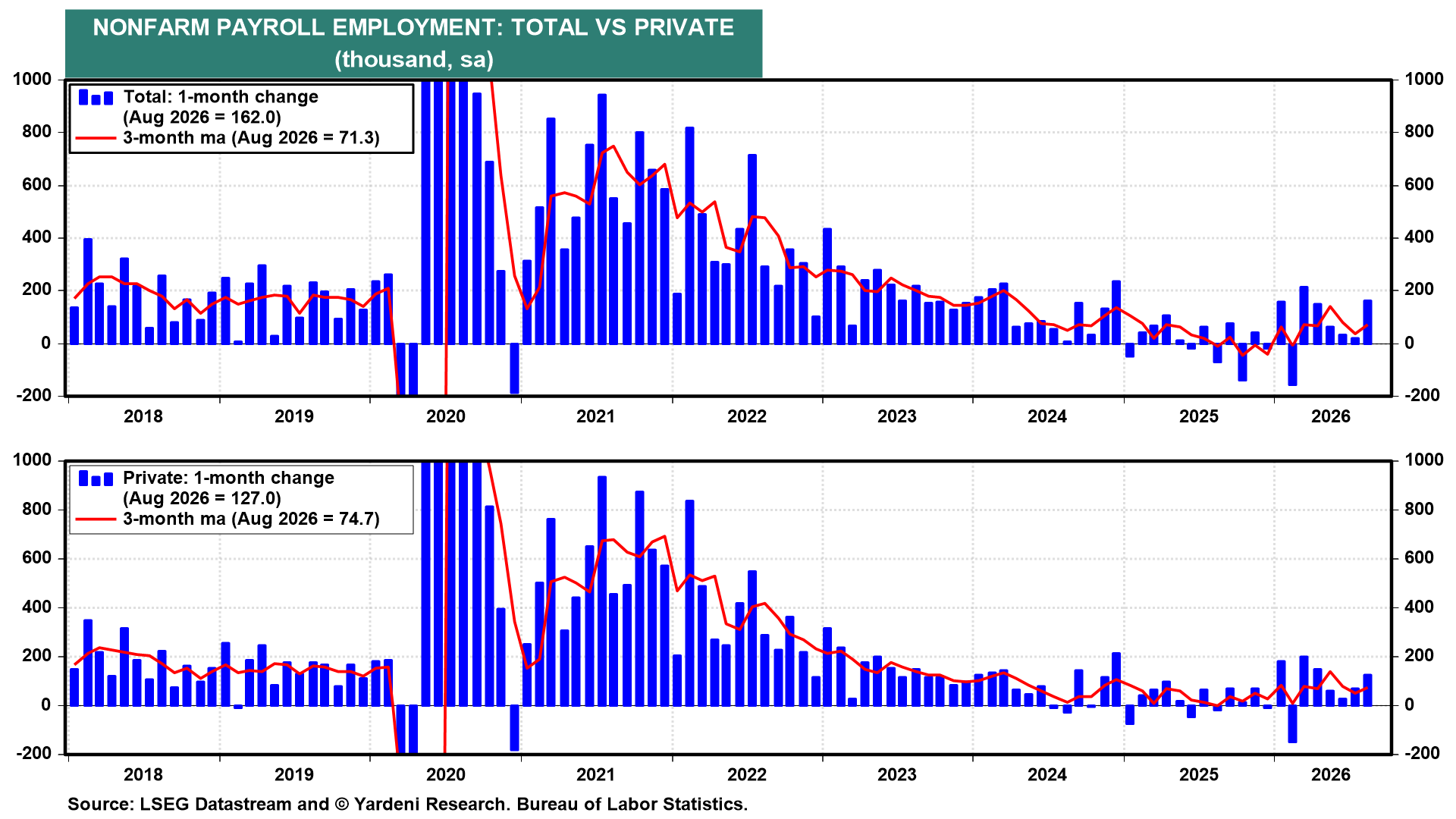
The US economy added 162,000 jobs in August, well above expectations, while the change in July payrolls was revised up to 21,000 from -23,000 (chart). Payrolls increased by an average of 71,300 over the past three months, while the six-month average rose to 107,000, its highest since July 2024. So far this year, job growth has averaged about 80,000 per month, up sharply from just 10,000 per month in 2025.
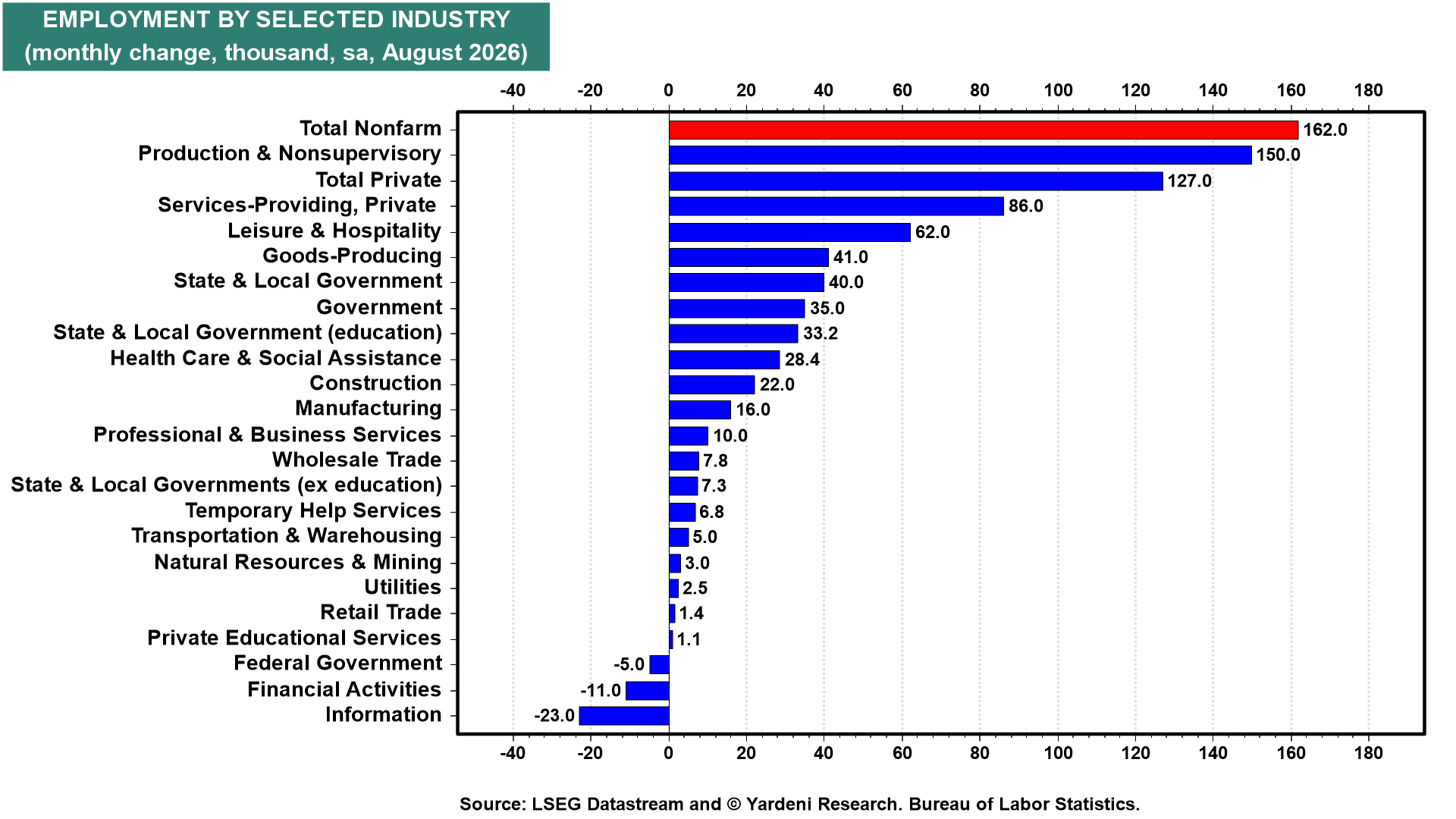
Leisure and hospitality led job growth, adding 62,000 jobs after losing 75,000 over the prior two months (chart). Local government education employment increased by 33,200 ahead of back-to-school season, while health care and social assistance also contributed meaningfully.
The AI investment boom is boosting employment in other industries. Manufacturing payrolls increased by an average of 14,000 over the past three months, the strongest gain since December 2022. The three-month average of construction job growth reached its highest level since January 2025 (chart).
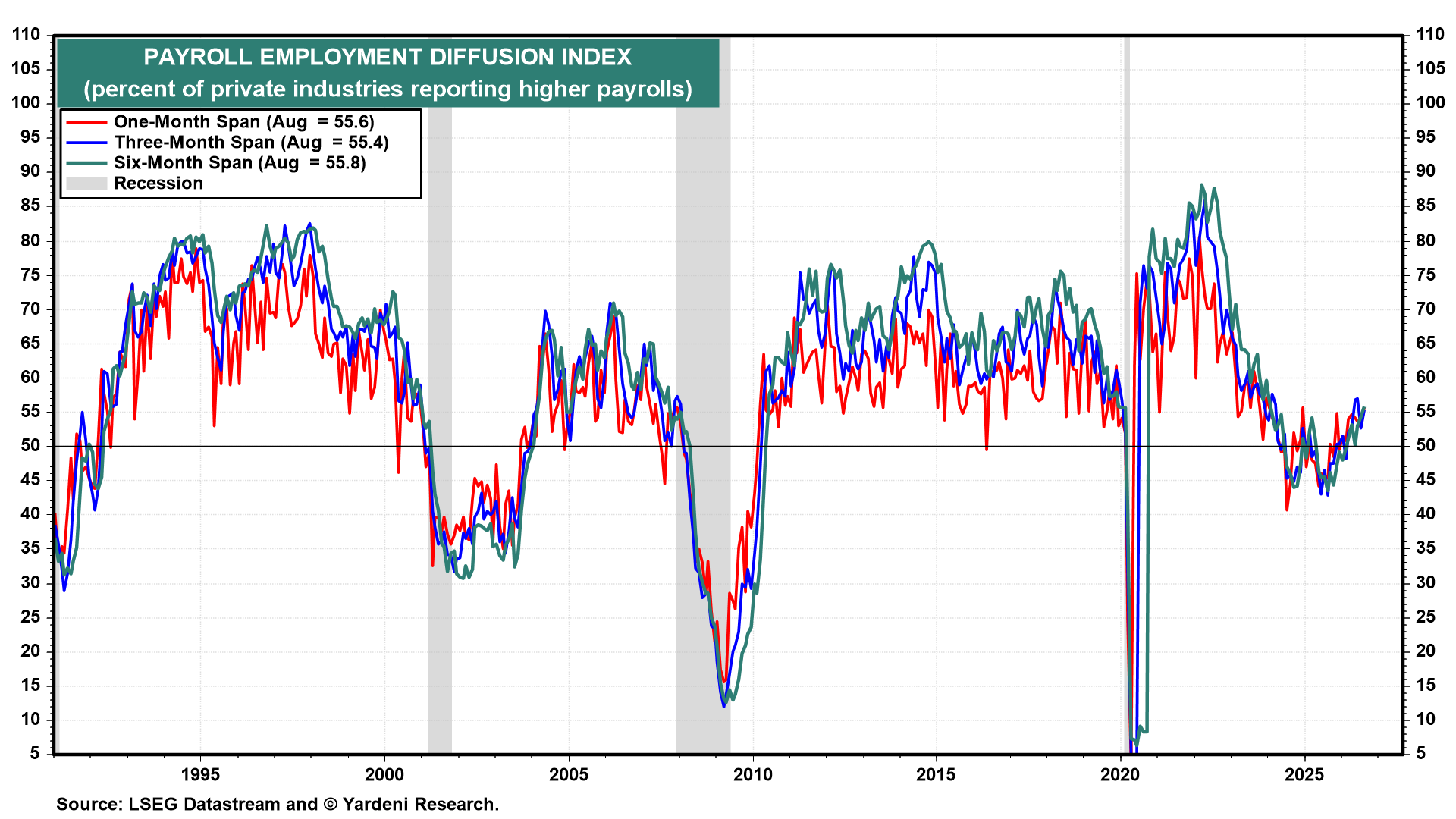
The payroll employment diffusion index confirms that job gains are spreading, with more than half of industries adding jobs in August. Both the one-month and six-month measures of hiring breadth reached their highest levels since January 2024 (chart).
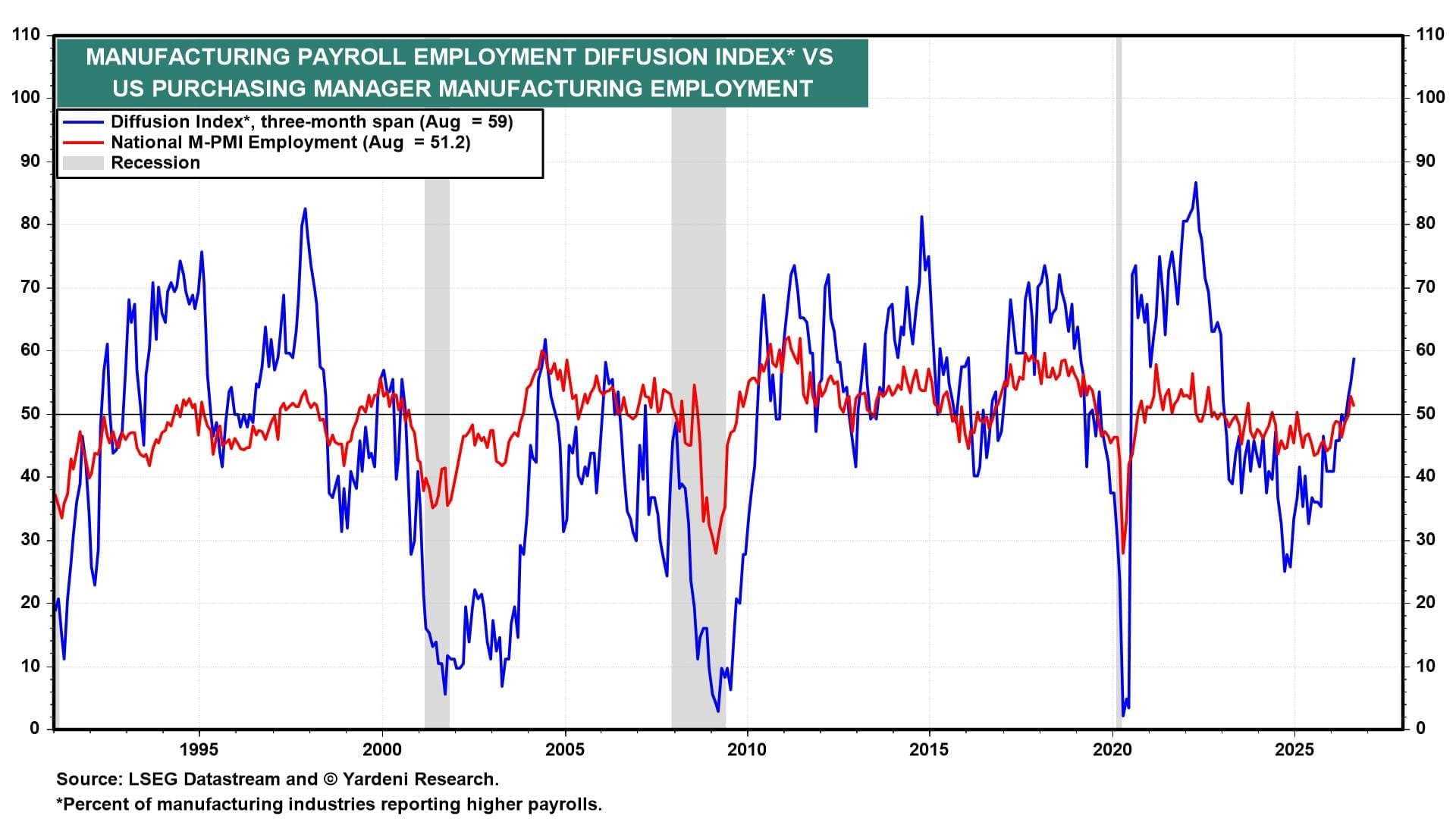
The broadening is particularly evident in manufacturing, where 59% of industries added jobs in August, the highest share since October 2022 (chart).
II. Unemployment and Labor Market Slack
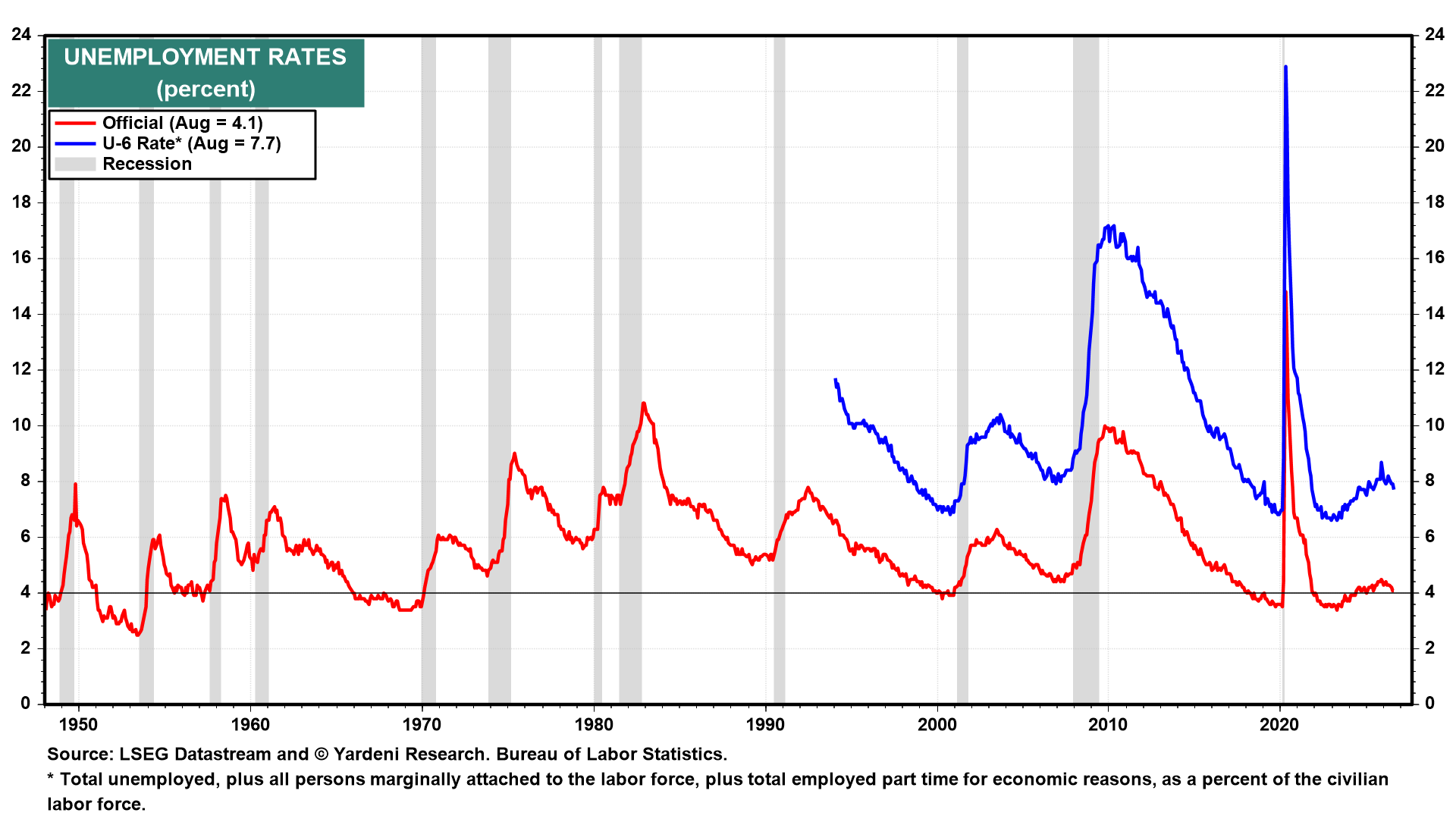
The unemployment rate remained unchanged at 4.1% in August, keeping it near prior cyclical lows (chart). The broader U-6 unemployment rate, which includes discouraged workers and those working part-time for economic reasons, fell to 7.7%, its lowest reading since January 2025.
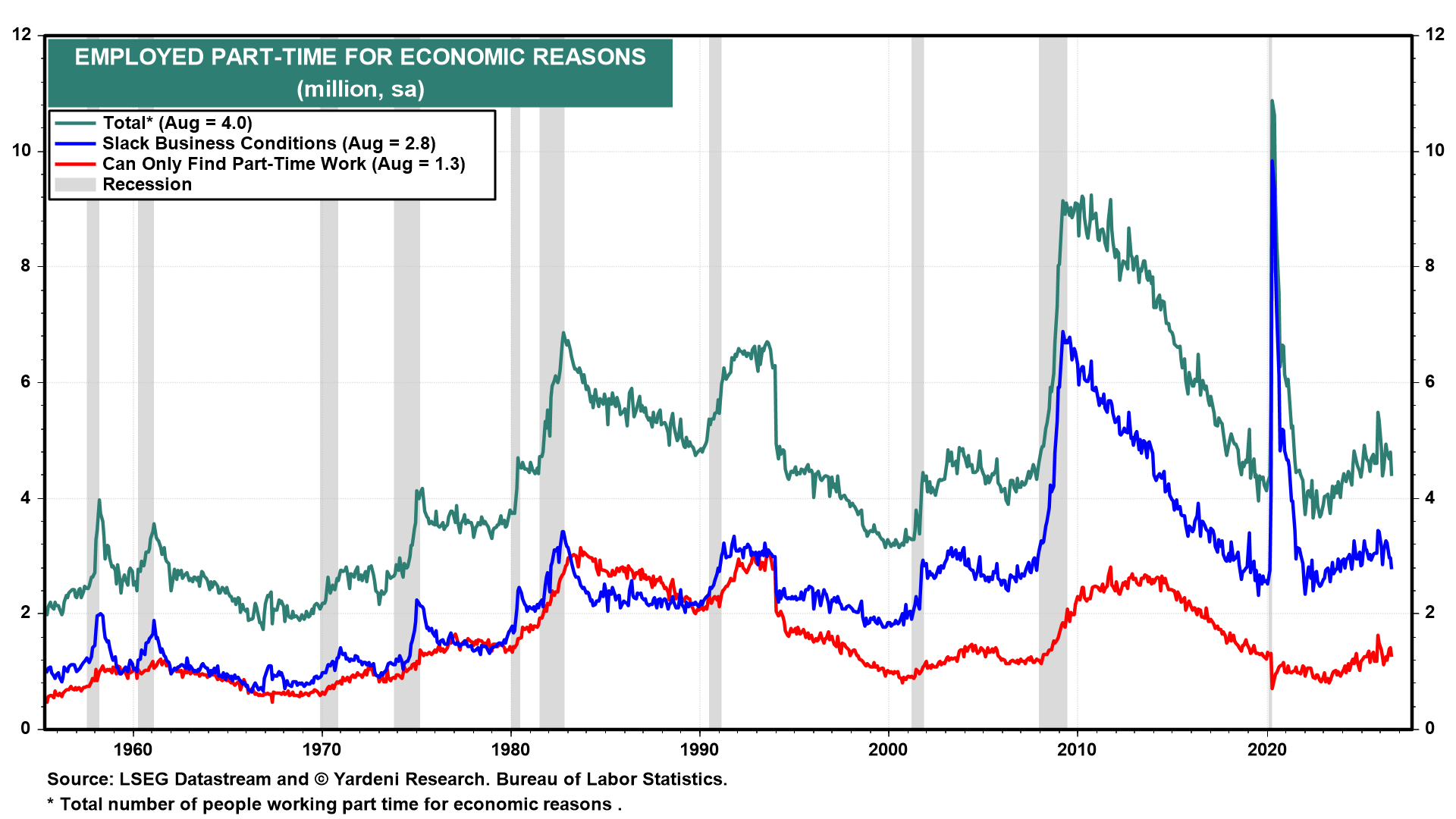
Another sign of limited labor-market slack is the recent decline in the number of workers employed part-time for economic reasons (chart).
III. Labor Supply
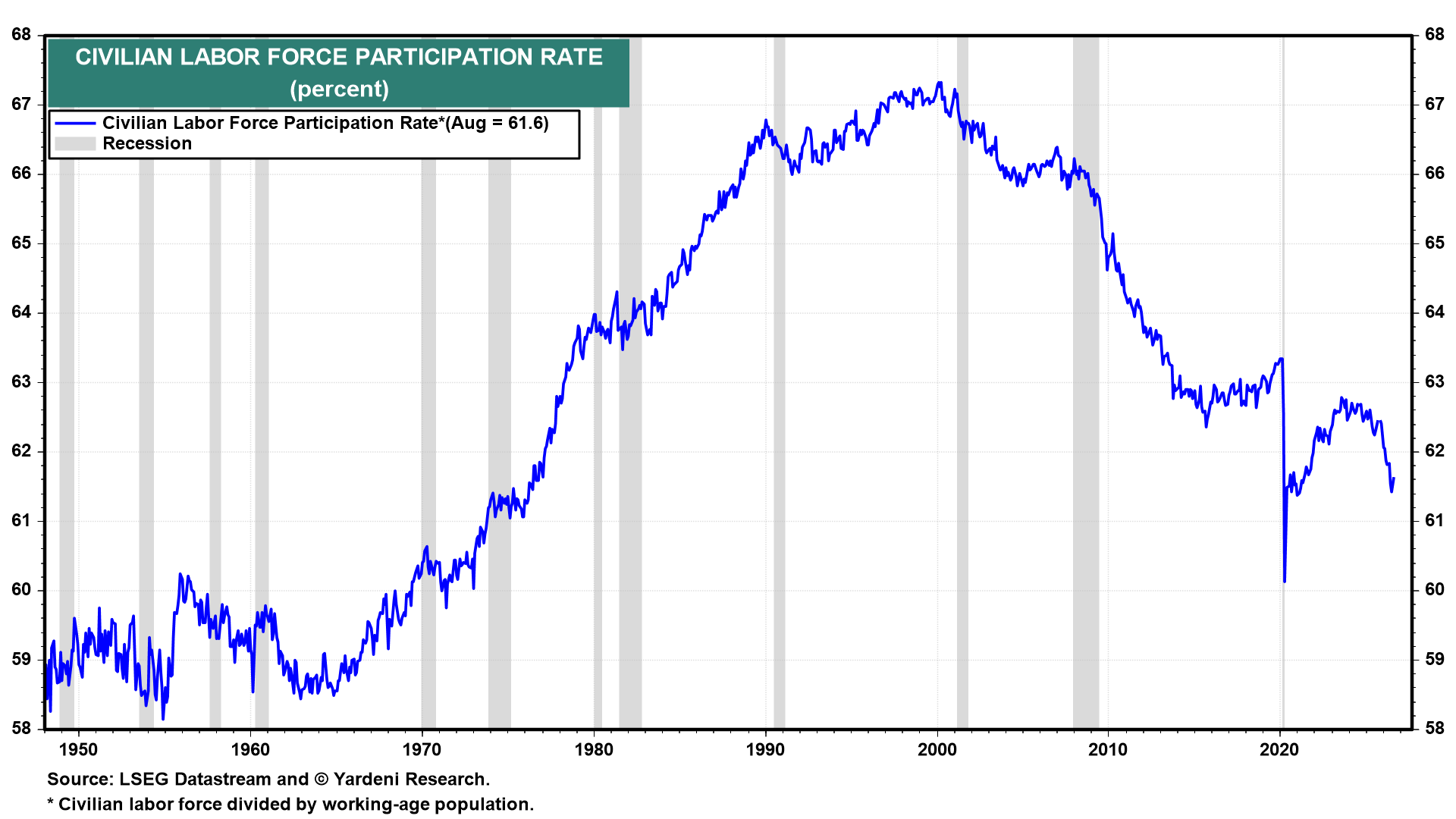
The unemployment rate was unchanged despite the 683,000 increase in the labor force. That was the largest gain since January 2025. The labor force participation rate rose to 61.6% in August, its first increase in nine months (chart). Nevertheless, it remains historically low.
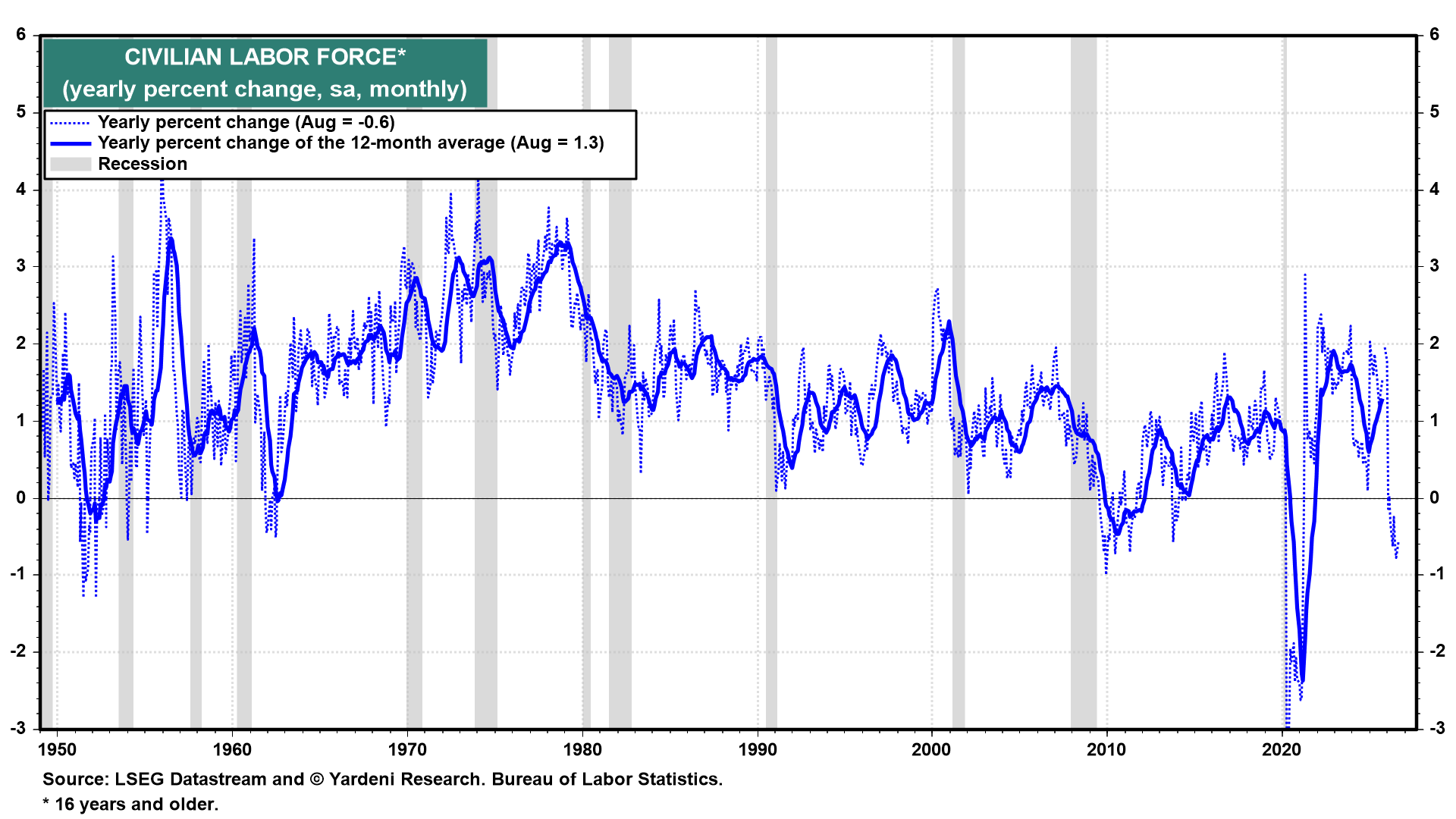
The outlook for labor force growth remains anemic. Structural headwinds from the wave of retiring Baby Boomers and a shrinking foreign-born labor force remain. August's uptick in the labor force isn't the start of a new trend. Indeed, on a y/y basis, it is still declining at a historically rapid pace (chart).
IV. Earned Income Proxy
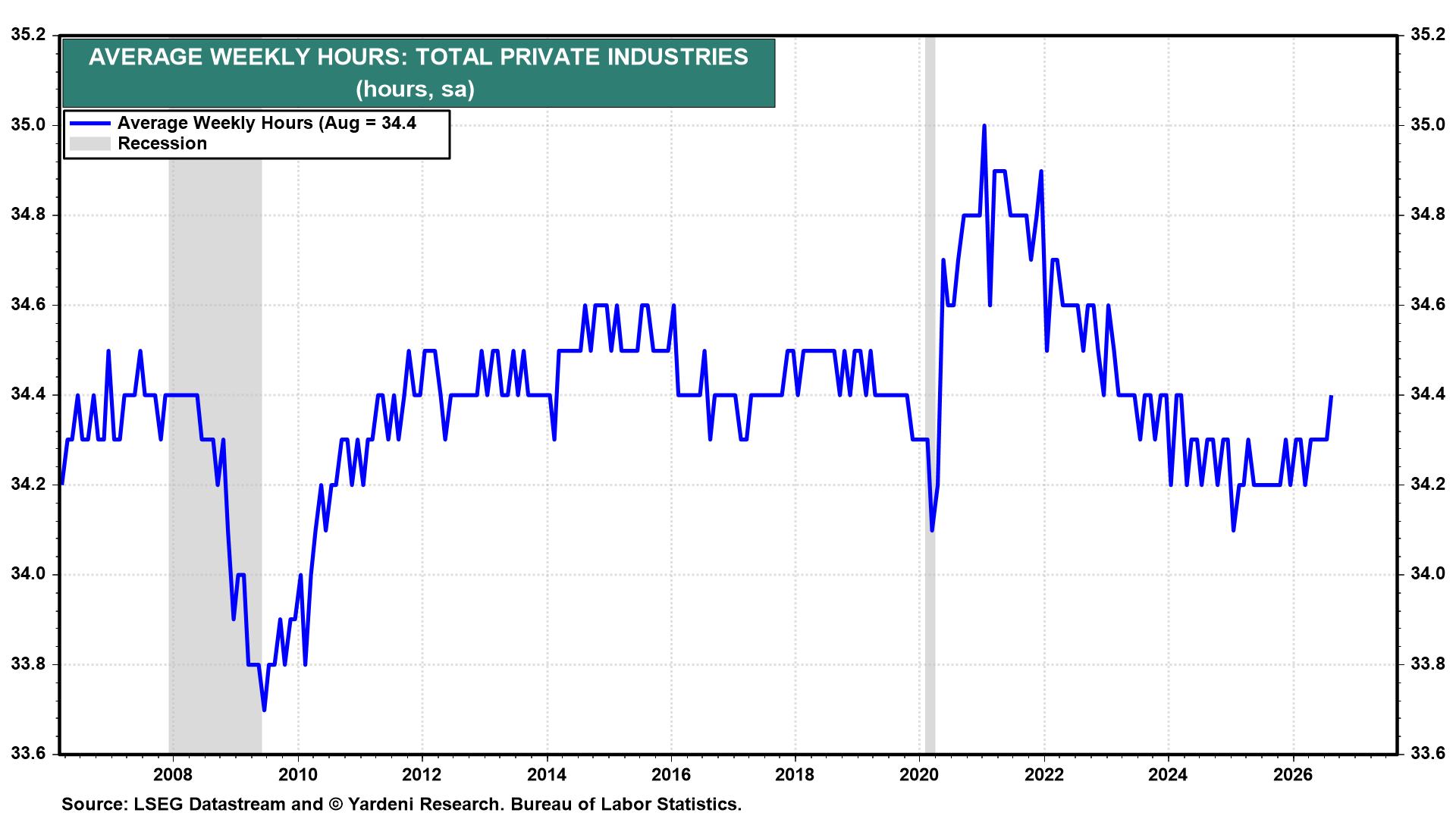
Our Earned Income Proxy (EIP) for private-sector wages and salaries in personal income rose sharply in August. Average weekly hours worked rose 0.3% m/m to 34.4, the highest level since March 2024 (chart).
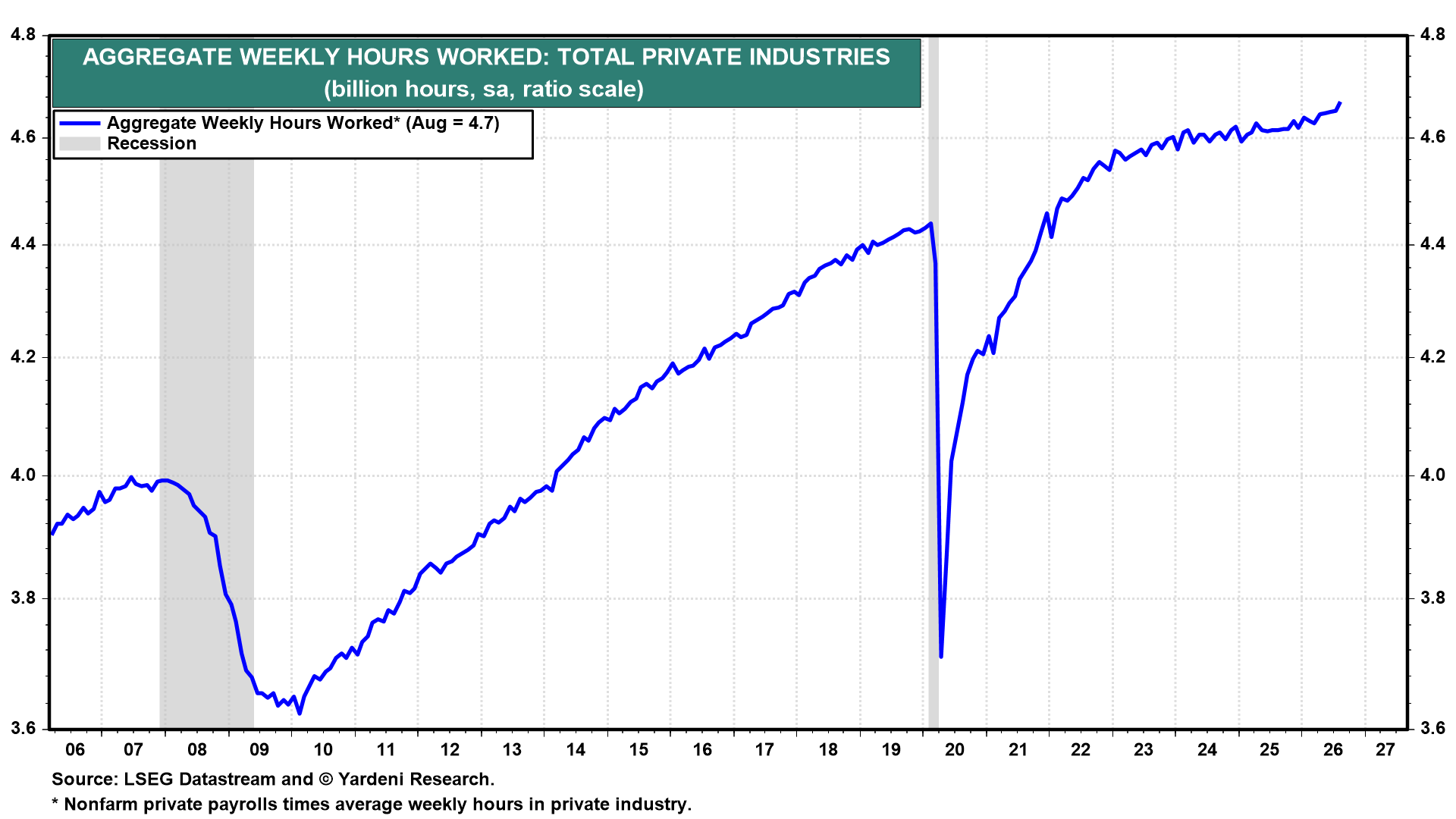
That gain, combined with the 0.1% m/m increase in private payrolls, drove a 0.4% m/m rise in aggregate weekly hours worked to a record high (chart).
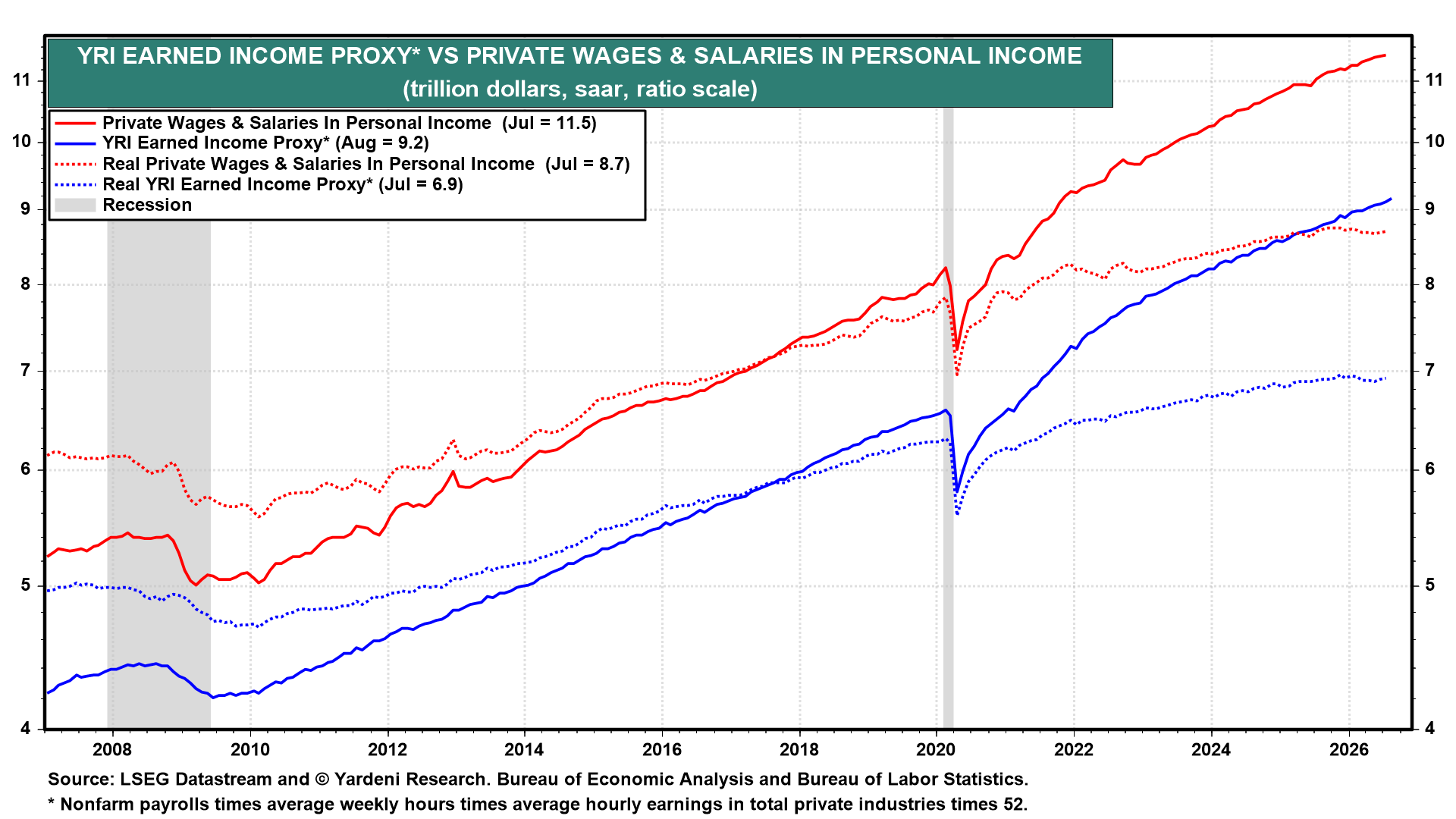
Adding the 0.3% increase in average hourly earnings resulted in a robust 0.7% increase in our EIP, its best gain since January 2026 (chart). The Cleveland Fed’s Nowcasting model estimates that the headline PCED rose 0.4% m/m in August, implying that our inflation-adjusted EIP rose by around 0.3% (chart).
V. Wage Inflation
On a y/y basis, average hourly earnings growth eased to 3.1% in August, the slowest pace since May 2021 (chart).
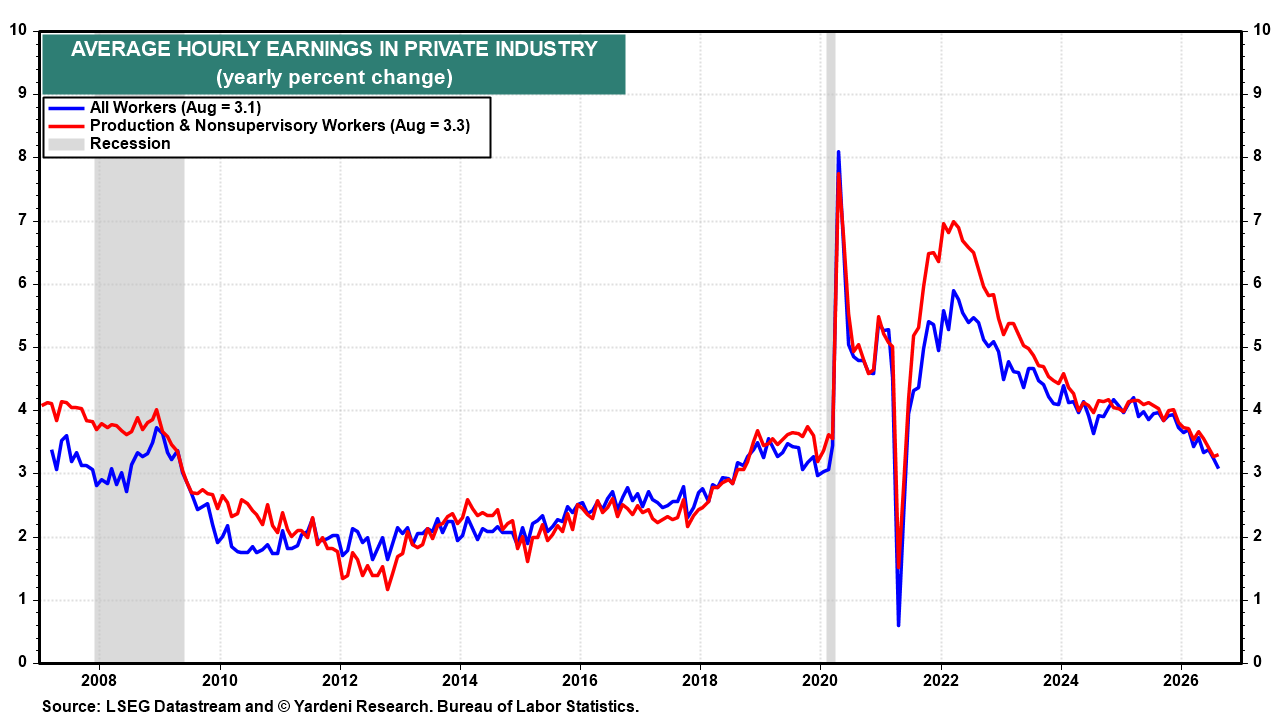
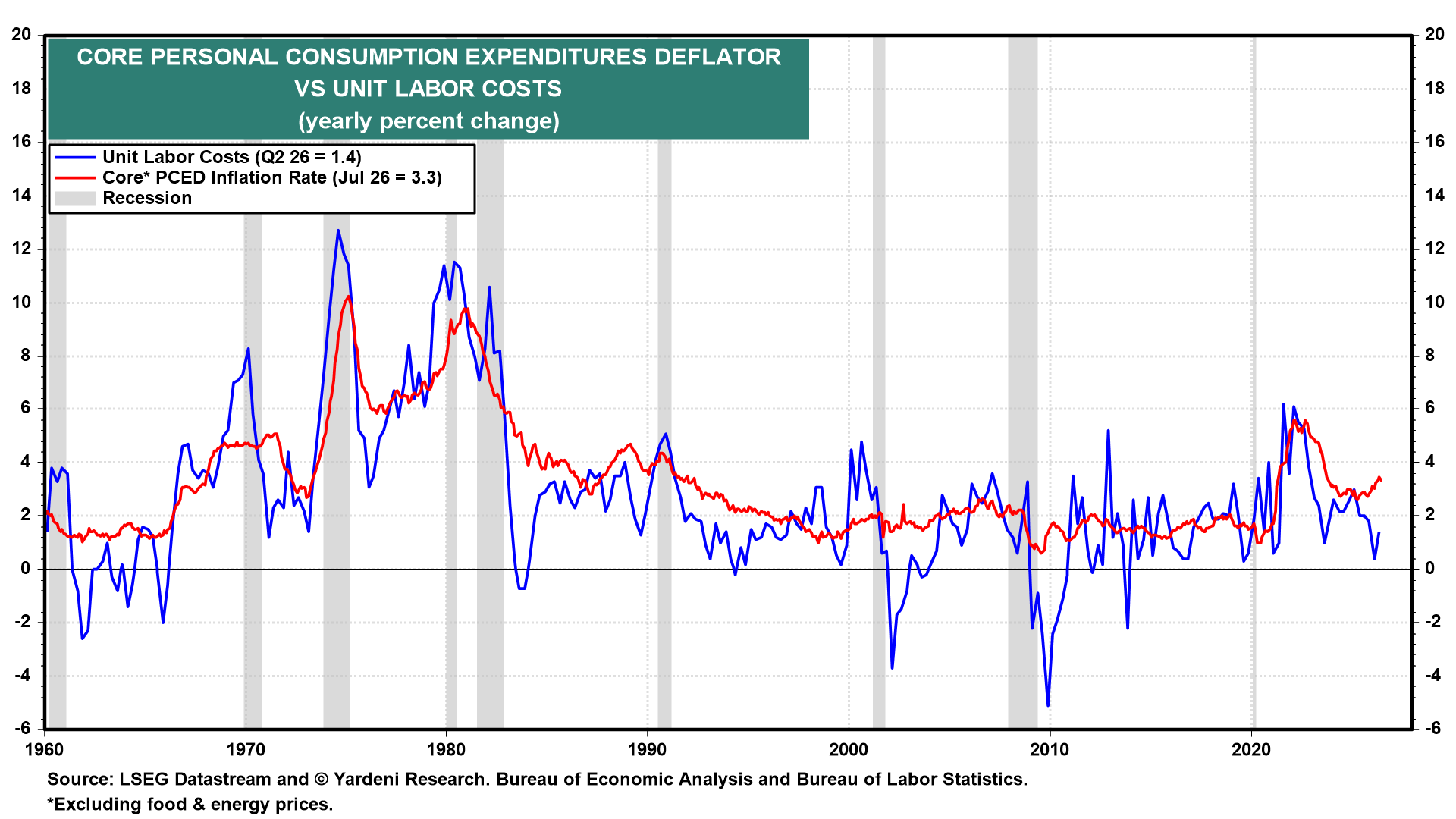
Slowing wage growth and subdued unit labor costs confirm that the labor market is not currently a source of inflationary pressure (chart).
Member discussion
Members discuss each post here, and Ed answers back. Sign in or become a member.
